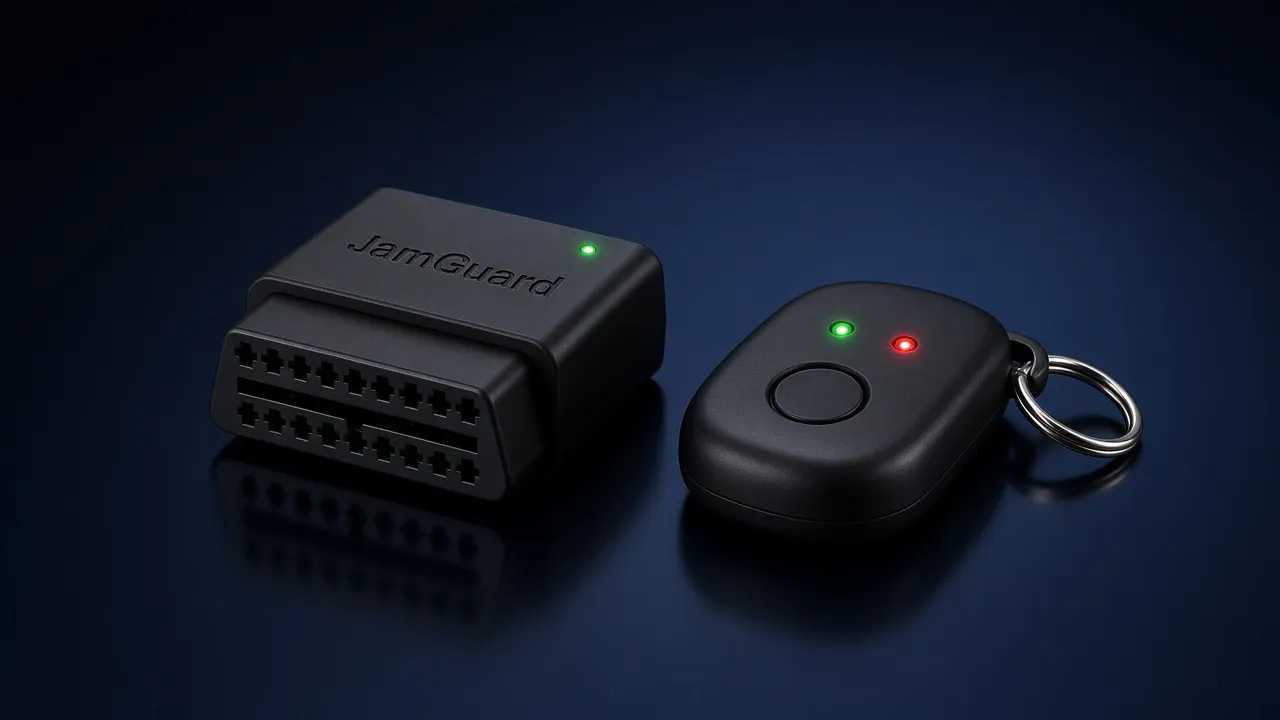
Plug it in
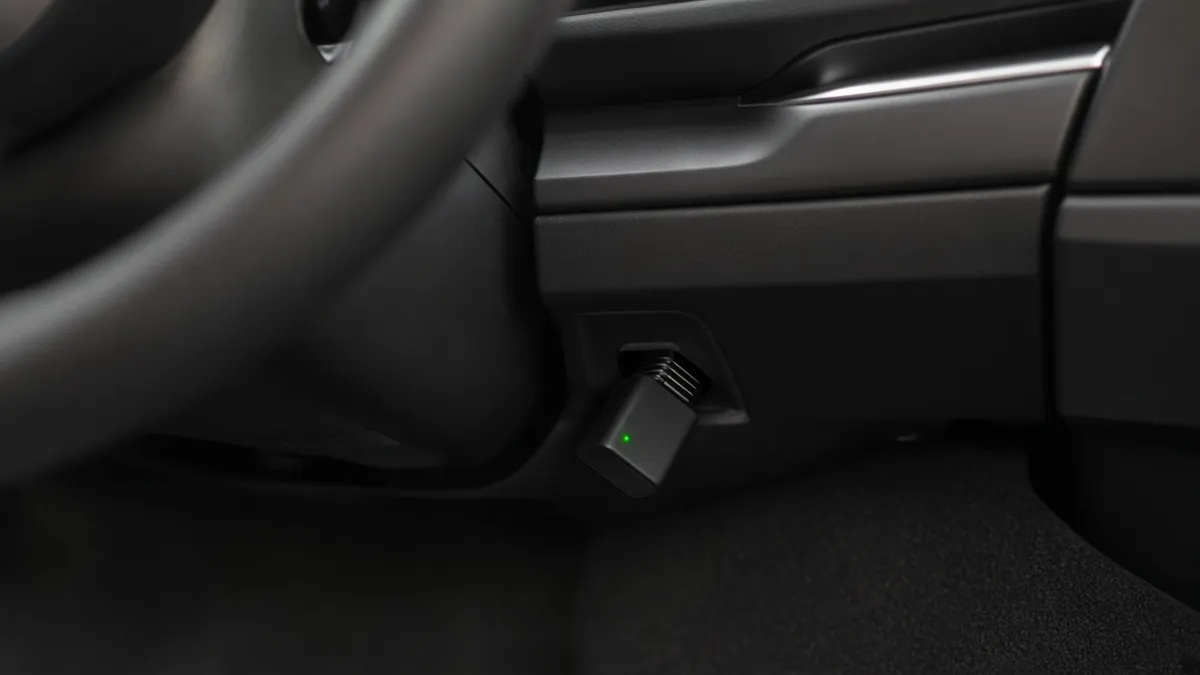
The car unit goes into the OBD-II port under your dashboard, the same port mechanics use. No wiring, no installer, ten seconds.
Launching in South Africa
Thieves use cheap pocket jammers to drown out your remote. You walk away, your car stays open. JamGuard catches it and tells you on your keychain. Green means locked. Red means go back.
01 / 05
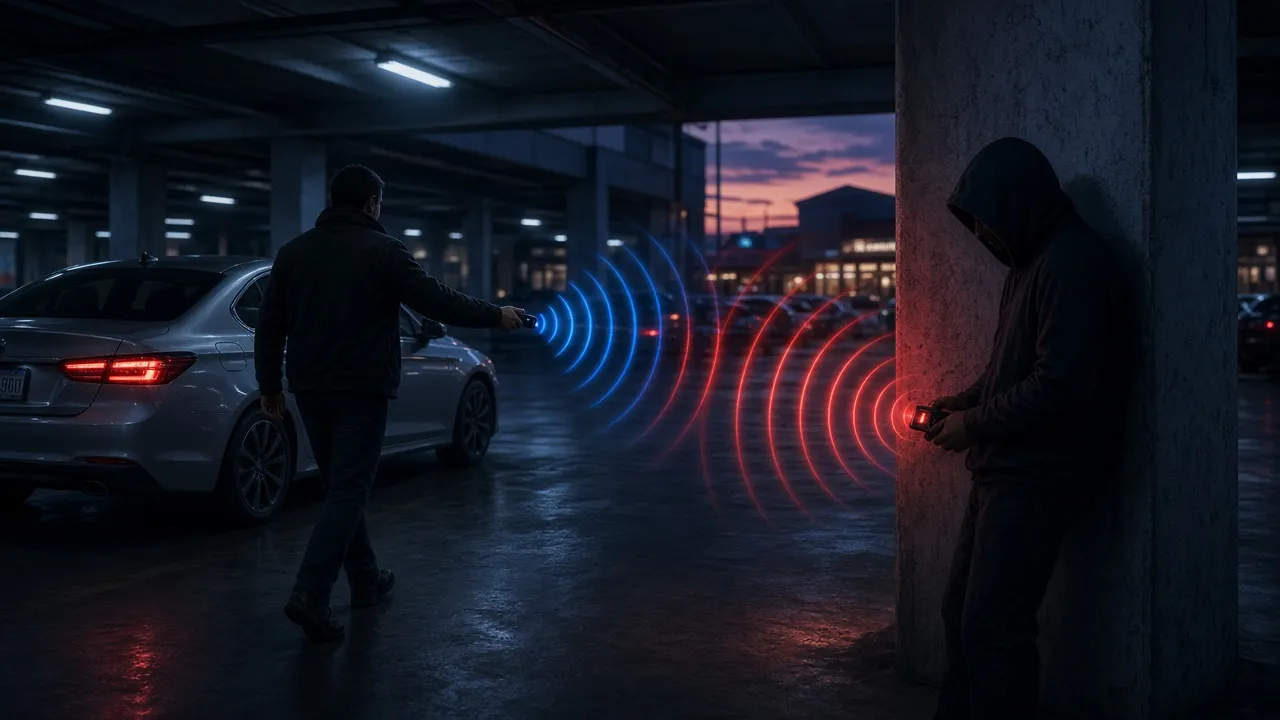
You hear nothing unusual. You walk towards the mall.
02 / 05
Behind a pillar, a pocket device floods 433 MHz with noise. Your car never hears the signal.
03 / 05
No beep. No flash you notice. No broken glass.
04 / 05
No sign of a break-in, so some insurers start asking awkward questions.
05 / 05
JamGuard flashes red the moment the jammer starts. You turn around, lock by hand, and the thief gets nothing.
Interactive
This is what the car unit sees: a live view of the 433 MHz band. Press lock, switch on the jammer, and watch the keychain react.
Pick a scenario.
How it works
The car unit goes into the OBD-II port under your dashboard, the same port mechanics use. No wiring, no installer, ten seconds.
Use your remote like always. JamGuard checks your car really locked and listens for jamming at the same moment.
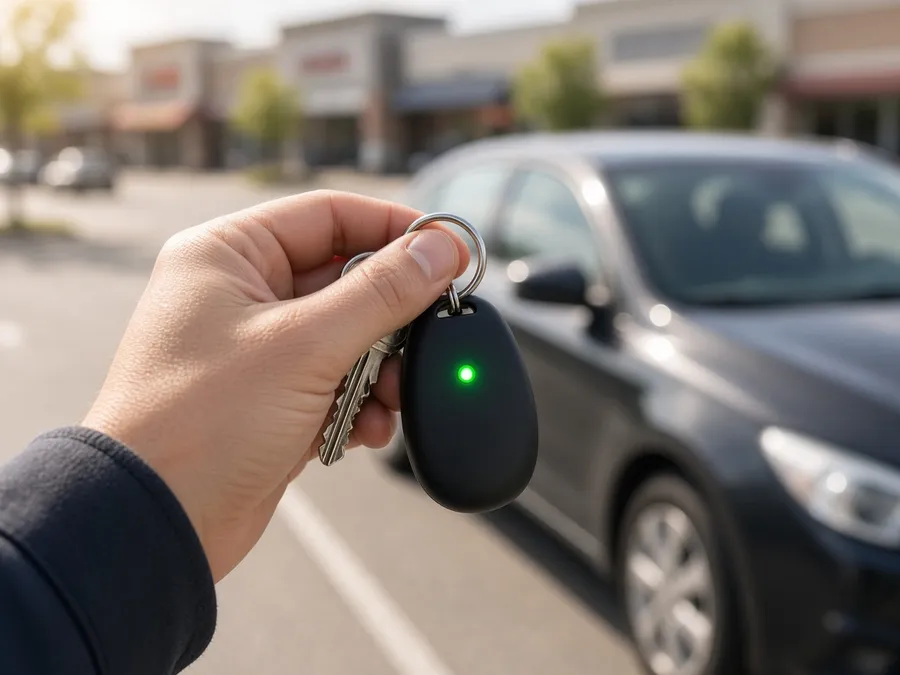
Green: locked and safe. Red: still open or jamming detected, so go back. It even checks by itself as you walk away.
The only manual you need
Locked, no jamming. Walk away.
Still unlocked. Press lock again.
Jammer nearby. Go back and lock by hand.
Out of range, or the unit was unplugged.
Engineered properly
0scans / sec
Samples the 433 MHz band 500 times a second and recognises the steady noise a jammer makes, without false alarms from normal remotes.
Listens to the lock messages your car already sends. Listen-only: it can never unlock, start or control your car.
Every message to your keychain is cryptographically signed, so nobody can fake a green light.
Deep-sleeps if your car battery gets low, so your car still starts after two weeks at the airport.
A motion sensor wakes the keychain when you move, so it confirms your car is locked without a button press.
0transmissions on your car's frequency
JamGuard never transmits on your car's remote frequency. Jammers are illegal. JamGuard is the opposite, and it is built to meet ICASA rules.
Early-bird pricing
For the first production batch. Reserve now and pay nothing until it ships.
Car unit + 1 keychain
R1 299 R999
Car unit + 2 keychains
R1 599 R1 249
Car rentals, dealers, fleets
Volume pricing
FAQ
JamGuard works with cars that have an OBD-II port, which is almost every petrol car from about 2006 onwards and most diesels from 2007. Jamming detection works on every one of them. Reading lock status works on most popular models, and we're testing more brands before launch. Tell us your car when you join the waitlist.
Yes. JamGuard only listens: it never transmits on your car's remote frequency and it never sends commands to your car. Jammers are illegal. JamGuard is the opposite.
No. It uses very little power, and it watches your battery voltage. If the battery runs low, for example at the airport for two weeks, it goes into deep sleep so your car still starts.
No. The car unit is listen-only on your car's network and has no way to unlock or start it. Messages to your keychain are signed, so they can't be faked either.
Roughly 10 to 40 metres, depending on walls and the parking lot. That covers the moment you walk away from your car, which is when jamming happens.
Several weeks per charge in normal use. It charges over USB-C, like your phone.
No, it works alongside them. Alarms and trackers help after a break-in. JamGuard helps stop the easiest break-in of all: a car that was never locked.
We're finishing road testing now. Waitlist members get first access, the early-bird price and delivery updates. No payment until it ships.
Be first in line
Join the waitlist to lock in the early-bird price. No payment now, cancel any time.